
Wasps normally do not reuse an abandoned nest. However, a different queen may build a new nest in the same area if it still offers shelter, warmth and easy access. Gaps beneath roof tiles, damaged soffits, wall cavities and undisturbed loft spaces can remain attractive year after year.
If wasps keep coming back to the same spot, it usually means the location continues to provide suitable nesting conditions. Treating an active colony deals with the immediate problem, but appropriate proofing may also be needed once the nest is inactive.
Key Points
- Wasps do not normally return to live in an old, abandoned nest.
- A new queen may establish a separate colony beside or near a previous nest.
- Repeated nesting is usually linked to shelter, access and a suitable internal void.
- Old nest material is not normally the main reason another queen selects the area.
- Never seal an entrance while an active colony may still be using it.
- Proofing should be completed only after the nest is inactive and without obstructing essential property ventilation.
- Repeated activity in the same part of a property may justify a professional inspection.
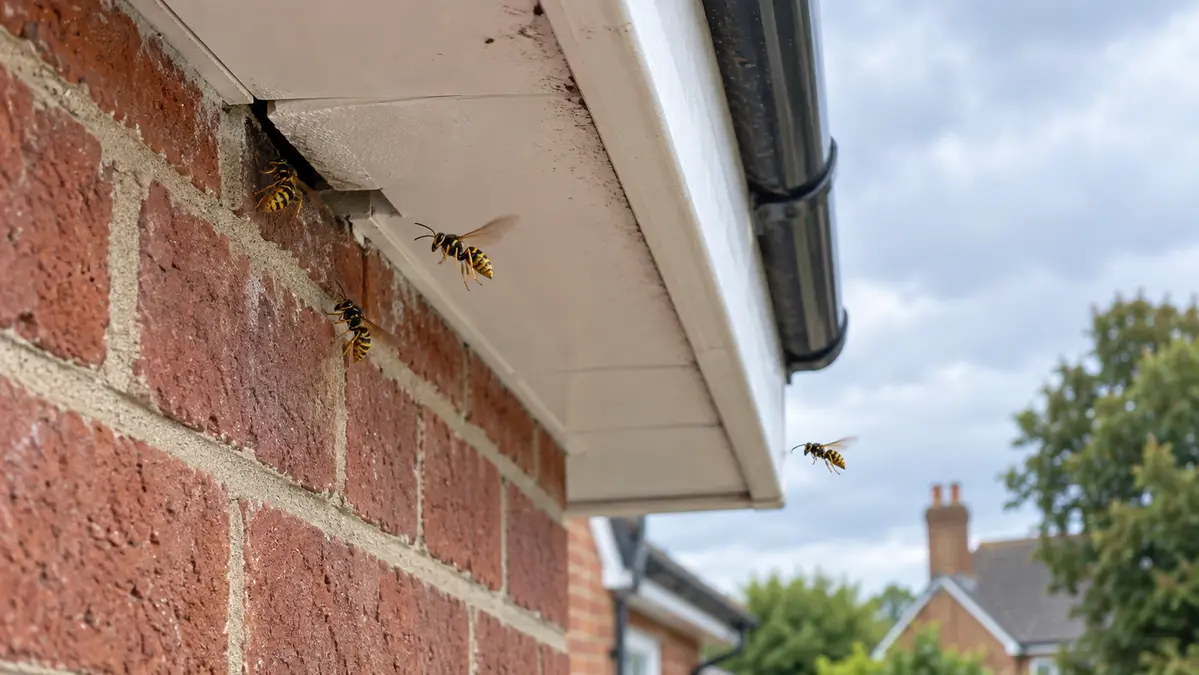
Do Wasps Return to the Same Nest Every Year?
In most cases, no. A social wasp nest is built for one seasonal colony.
A queen begins the nest in spring and initially raises the first generation of workers herself. Once those workers emerge, they take over nest expansion, food collection and care of the developing larvae. The colony grows through the warmer months and may contain a substantial number of wasps by late summer.
As temperatures fall, most of the colony dies. Newly produced queens leave to mate and seek protected places in which to overwinter. The paper nest is then abandoned.
The following spring, a surviving queen starts a new nest rather than restarting the old colony. She may select the same roof space, wall cavity or outbuilding, but the nest she builds will be a new structure occupied by a different colony.
This distinction is important:
- Old nest: Normally remains empty and gradually deteriorates.
- Same location: May still attract another queen.
- New colony: Starts from a newly constructed group of cells.
It can therefore appear that the same wasps have returned, even though a different queen is establishing a completely new colony.
Why Do Wasps Keep Choosing the Same Area?
Wasps do not need to remember a previous nest for the same location to be used again. A property feature that provided good nesting conditions one year may offer exactly the same advantages the following spring.
A queen usually looks for somewhere that is:
- Sheltered from wind and heavy rain
- Relatively dry
- Protected from frequent disturbance
- Accessible through a small opening
- Large enough for the colony to expand
- Stable enough to support the growing nest
- Close to suitable food and water sources
If those conditions remain unchanged, another queen may independently select the same area.
The original entry point is still open
A gap beneath a roof tile, damaged section of soffit or opening around a pipe may lead directly into a protected void. Treating a nest does not automatically repair that opening.
A future queen exploring the building may discover the same route and build inside the same roof or wall space.
The space remains sheltered
Lofts, eaves, garages, sheds and wall cavities protect a developing nest from weather and predators. They can also remain relatively undisturbed for long periods.
A concealed space that supported one colony may still be suitable for another unless the relevant access point is repaired correctly.
There may be more than one suitable cavity
What appears to be the same nesting spot from outside may connect to a much larger internal space. One nest might have been positioned above a soffit, while the next is several feet away inside the same roof void.
The exterior flight path can look almost identical even though the nests are separate.
The property offers several similar entry points
Older or weathered rooflines may contain multiple small openings. Sealing one gap does not prevent a queen from finding another nearby.
A proper assessment should consider the full area rather than focusing only on the most obvious hole.
Understanding the Annual Wasp Life Cycle
The wasp life cycle helps explain why activity can return after a property appears clear throughout winter.
Early spring
A mated queen emerges from overwintering and searches for a suitable nesting site. At this stage, the nest may contain only a small number of cells.
The queen gathers fibres from weathered wood, mixes them with saliva and uses the resulting paper-like material to construct the nest.
Late spring and early summer
The first worker wasps emerge. They take over foraging and nest construction while the queen concentrates on laying eggs.
Activity around the entrance becomes easier to notice as more workers begin leaving and returning.
Midsummer
The colony expands rapidly. Wasps may establish a regular flight path between the nest entrance and surrounding food or water sources.
This is often when property owners first become aware of an active nest.
Late summer and autumn
The colony reaches maturity and produces new queens and males. Worker behaviour can become more noticeable as natural food sources change and wasps become interested in sugary food and drinks.
As colder conditions arrive, the original queen, workers and males normally die. Newly mated queens leave the colony and overwinter separately in protected locations.
The old nest is then abandoned. A surviving queen may establish a new colony the following spring, potentially in the same general area.
Common Places Where Wasp Nests Reappear
Wasps can nest in many parts of a property, but repeat activity is particularly common around sheltered structural voids.
Potential nesting areas include:
- Lofts and roof voids
- Eaves and soffit boxes
- Gaps beneath roof tiles
- Wall cavities
- Fascia boards
- Chimney voids
- Air bricks and ventilation openings
- Garages and sheds
- Porches
- Summer houses
- Garden buildings
- Bird boxes
- Dense hedges
- Hollow trees
- Undisturbed ground cavities
A steady stream of workers entering and leaving one opening is among the clearest signs of a wasp nest, especially when the flight path continues throughout warm daylight hours.
Do not stand directly beneath an entrance or attempt to inspect a concealed cavity at close range.
Do Pheromones Make Wasps Return?
Pheromones play an important role in how an active wasp colony communicates. Wasps use chemical signals for functions such as alarm responses and recognition within the colony.
However, old pheromone residue should not automatically be treated as the main reason a new queen chooses the same site in a later season. The continued presence of shelter, access and a protected nesting void is a more practical explanation for repeated activity.
Removing an old nest does not guarantee that another queen will avoid the area. Similarly, leaving an inaccessible abandoned nest in place does not mean it will definitely attract a new colony.
The most useful questions are:
- Is there still an accessible opening?
- Does it lead to a sheltered void?
- Are there other nearby gaps?
- Can the opening be repaired without affecting ventilation?
- Has the current colony definitely become inactive?
These points are more important than relying on sprays, artificial deterrents or unsupported claims about removing every chemical trace.
Should an Old Wasp Nest Be Removed?
An abandoned nest does not always need to be removed.
Old wasp nests are made from a fragile paper-like material and are not normally reused by a new colony. If the nest is inaccessible and creating no practical problem, removing it may require unnecessary disturbance to insulation, roofing or internal finishes.
Removal may be considered when:
- The nest is easily and safely accessible.
- It is obstructing maintenance or repair work.
- Nest material is falling into an occupied area.
- The location needs to be inspected for damage.
- Proofing work cannot be completed without removing it.
- There is uncertainty about whether the colony is still active.
Never assume a nest is abandoned simply because activity has temporarily reduced. Cool weather, rain and time of day can all affect visible wasp movement.
If there is any doubt, observe the suspected entrance from a safe distance during a mild part of the day or arrange a professional inspection.
How Can You Tell Whether It Is a New Nest?
Without inspecting the nesting area, it may be difficult to confirm whether the visible activity comes from a new nest or a colony that was never dealt with during the current season.
Signs that it may be a new seasonal nest include:
- Activity begins during spring after an inactive winter.
- Only occasional queen activity is initially visible.
- The nest is small and contains relatively few cells.
- Activity gradually increases as the first workers emerge.
- The nest occupies a slightly different part of the same void.
Signs of an established colony include:
- A steady stream of workers entering and leaving.
- Frequent activity throughout warm daylight hours.
- Persistent buzzing inside a wall, ceiling or roof void.
- Wasps appearing inside nearby rooms.
- Activity continuing around the same entrance for several weeks.
When wasps begin appearing in bedrooms or other rooms after dark, a nearby roof void, internal gap or artificial light source may explain why wasps enter houses at night.
Can You Stop Wasps Nesting in the Same Spot?
You can reduce the likelihood of another nest by addressing suitable access points after the current colony is no longer active.
No proofing method can guarantee that wasps will never nest anywhere on a property. A queen may find a different opening or choose an outdoor location. The realistic aim is to prevent access to known structural voids without damaging the building or blocking essential ventilation.
Do not seal an active entrance
This is the most important rule.
If workers are still using an entrance, sealing it can trap part of the colony inside. Wasps may then search for another route and emerge through light fittings, loft hatches, vents or gaps leading into occupied rooms.
Treatment or natural colony decline must be confirmed before permanent proofing begins.
Inspect the surrounding area
Do not concentrate solely on one visible hole. Check the wider roofline and external structure for:
- Damaged soffits
- Loose fascia sections
- Gaps beneath roof tiles
- Cracked mortar
- Open joints around pipes and cables
- Damaged window or door seals
- Unsuitable gaps around vents
- Deteriorated timber
- Openings around outbuildings
Roof-level inspection should be completed safely. Do not use ladders around active wasp traffic.
Repair appropriate structural gaps
Once the colony is inactive, suitable gaps can be repaired using materials appropriate for that part of the building.
The correct repair may involve:
- Repairing a damaged soffit or fascia
- Repointing cracked mortar
- Securing loose roofline materials
- Sealing appropriate gaps around service penetrations
- Repairing damaged window screens
- Replacing deteriorated timber
- Installing suitable insect-resistant mesh where ventilation must remain open
Air bricks, vents and roof ventilation should not simply be filled or sealed. Restricting airflow can create condensation, damp and other building problems. Any mesh must be appropriate for the opening and must preserve the ventilation it was designed to provide.
Monitor the area during spring
Spring is the most useful time to watch previously affected areas. A queen beginning a nest produces far less traffic than an established summer colony, so early signs can be subtle.
Look for:
- A large wasp repeatedly visiting one opening
- Early paper nest material
- Intermittent activity around sheds, lofts or eaves
- Wasps entering a sheltered void
- Fresh activity near a previous entrance
Do not handle or disturb an early nest if its position makes access unsafe.
Do Fake Wasp Nests Prevent New Colonies?
Artificial nests are often sold on the idea that wasps avoid areas already occupied by another colony. Their effectiveness is unreliable and should not replace inspection, maintenance or proofing.
A queen selecting a nest site responds to several environmental factors. Hanging a paper imitation nearby does not repair roofline gaps, close a cavity or remove access to a sheltered void.
If a property experiences repeat nesting, identifying the entry route is more useful than relying on visual deterrents.
Strong-smelling sprays and home remedies are similarly unlikely to provide lasting protection. Some products may temporarily affect individual wasps without addressing the reason the site remains accessible.
What to Do If Wasps Are Back in the Same Area
If you notice wasps around a previous nesting location:
- Observe the area from a safe distance.
- Note the exact opening workers appear to be using.
- Check whether activity occurs occasionally or forms a regular flight path.
- Keep children and pets away from the entrance.
- Close nearby windows if wasps are entering the property.
- Avoid striking the wall, soffit or ceiling around the nest.
- Do not spray into a concealed void.
- Do not seal the entrance.
- Arrange an assessment if activity is persistent or the nest is close to an occupied area.
A short video recorded from a safe distance may help show the flight path, but do not approach the entrance to obtain it.
What Not to Do
Avoid attempting to solve recurring wasp activity by:
- Blocking the entrance while workers are still active
- Removing roof tiles around the flight path
- Entering a loft to search for the nest
- Spraying insecticide blindly into a cavity
- Striking or flooding a concealed nest
- Lighting fires or using smoke
- Filling ventilation openings without considering airflow
- Working from a ladder near active wasps
- Assuming an old nest is active without checking
- Assuming a quiet nest is dead after observing it for only a few minutes
Concealed nests can be positioned away from the visible entrance. Disturbing the opening may not give direct access to the nest and can increase the chance of defensive activity.
When to Contact a Pest Controller
Professional help should be considered when:
- Wasps have established a regular flight path.
- The nest is inside a loft, wall cavity or roof void.
- Wasps are entering occupied rooms.
- The entrance is above ground level.
- The activity is close to a doorway, path or bedroom.
- A resident has a known allergy to wasp stings.
- The nest location cannot be confirmed safely.
- Previous treatment has not stopped the activity.
- Proofing is required after the colony becomes inactive.
A technician can assess whether the activity comes from a current nest, identify the likely entrance and advise when any proofing work should be completed.
Nests inside lofts, roof voids and wall cavities may require professional wasp nest removal when the entrance cannot be approached safely.
The expected cost of wasp nest removal in Bridgend can vary according to the nest’s position, access requirements and whether specialist equipment is needed.
Frequently Asked Questions
Why do wasps keep coming back to the same spot?
Wasps may repeatedly nest in the same area because it continues to provide shelter, stable conditions and access to a protected void. It is normally a new queen building a new nest, rather than the previous colony returning.
Do wasps use the same nest twice?
Social wasps do not normally reuse an abandoned nest. A new queen builds a fresh nest, although she may select the same loft, wall cavity, shed or roof area.
Do wasps remember where their old nest was?
The queen that founded the previous colony normally dies as the seasonal colony declines. A different queen may independently find the same location because its physical conditions remain suitable.
Will removing an old nest stop wasps returning?
Not necessarily. Removing nest material does not close the opening or make the surrounding void inaccessible. Appropriate proofing after the colony is inactive is more relevant to preventing access.
Should I remove an old wasp nest from my loft?
An inaccessible abandoned nest can often be left alone if it is not causing damage or obstructing work. Removal may be appropriate when it is safely accessible or when repairs and proofing need to be completed.
When is it safe to seal a wasp entrance?
The entrance should only be sealed after the colony has been treated or confirmed inactive. Sealing it too early can trap workers and cause them to search for an alternative route into the property.
Can wasps build a new nest next to an old one?
Yes. A new queen may build near an abandoned nest if the surrounding space remains sheltered and accessible. The new colony will still occupy a separately constructed nest.
Why do wasps repeatedly nest around the roof?
Rooflines provide sheltered spaces such as eaves, soffits and loft voids. Small gaps beneath tiles or around fascia boards can give queens access to these protected areas.
Does an old nest attract new queens?
An old nest is not normally reused, and it should not automatically be assumed that nest residue attracts a new queen. Shelter, access, temperature and protection from weather are more practical explanations for repeated nesting.
Can I prevent every future wasp nest?
No method can guarantee that wasps will never nest anywhere on a property. Repairing known access points and maintaining the roofline can reduce the likelihood of them entering the same structural void.
Have Wasps Returned to the Same Area?
If wasps are active around a previous nesting location, do not assume they are using the old nest. A new queen may have established another colony because the area remains sheltered and accessible.
Observe the flight path from a safe distance, avoid sealing the entrance and keep people and pets away from the affected area. Once the nest has been assessed and is no longer active, suitable repairs can help reduce the chance of another queen entering the same void.
Professional wasp nest removal in Bridgend can help confirm whether the activity comes from a new colony and identify the safest next step.