
Rats are unlikely to go away on their own while they still have access to food, water and a safe place to shelter. Their activity can become quieter or move to another part of the building, but a few silent nights do not necessarily mean the rats have left.
Once rats discover a reliable entry point and suitable harbourage, they may continue using the property until the current infestation is controlled and the access route is dealt with. Professional rat and mice control in Bridgend can help confirm what is causing the activity, locate likely entry points and determine the appropriate next step.
Key points
- Rats rarely abandon a warm, sheltered property without a reason.
- Removing accessible food may reduce activity but may not remove rats already nesting inside.
- A temporary absence of noise is not proof that the infestation has ended.
- Rats may move between lofts, wall cavities, drains, floors and neighbouring properties.
- Effective control normally involves investigation, treatment, monitoring and proofing.
- The longer an infestation is ignored, the greater the opportunity for contamination and property damage.
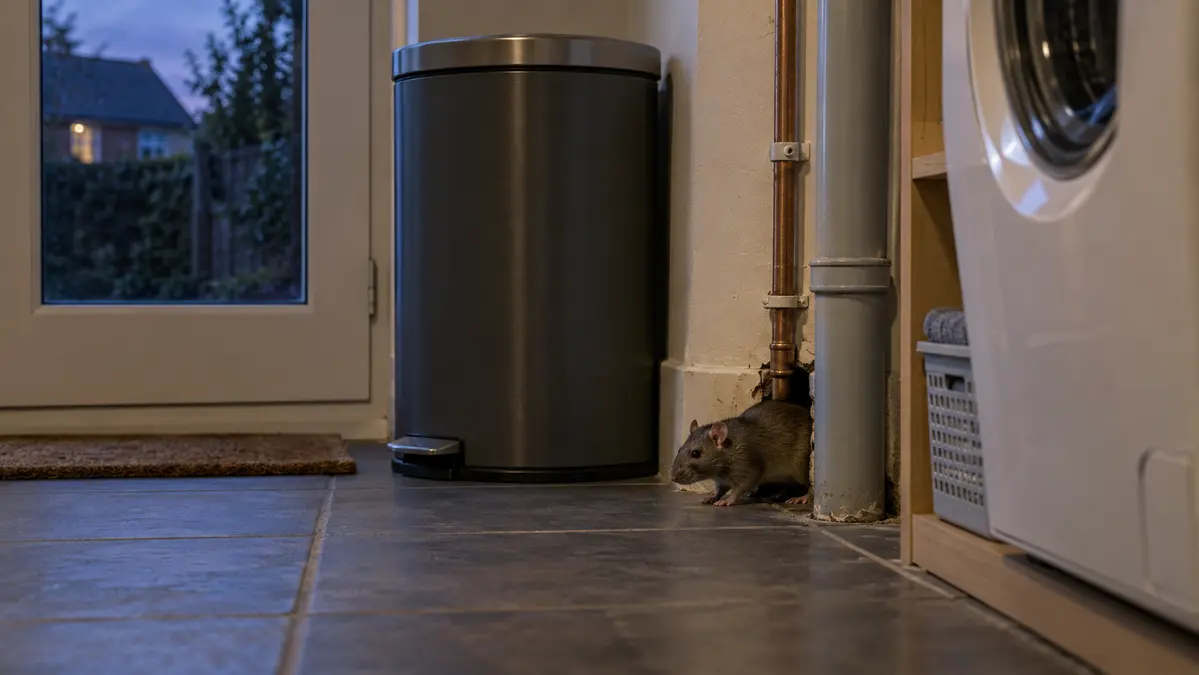
Why do rats stay in a house?
The brown rat, Rattus norvegicus, is highly adaptable. A property does not need to be dirty for rats to enter it. An opening, a sheltered space and access to food or water may be enough.
Rats commonly remain in or around buildings because they have found one or more of the following.
A secure nesting area
Lofts, wall cavities, spaces beneath floors, outbuildings and cluttered storage areas can provide protection from bad weather, people and predators.
Insulation, paper, cardboard and other soft materials may also be used for nesting. If a rat has established a secure harbourage, it has little reason to leave voluntarily.
A regular source of food
Rats are opportunistic feeders. Food may come from:
- Unsealed household waste
- Pet food left out overnight
- Bird seed beneath feeders
- Compost bins
- Food stored in damaged packaging
- Livestock or poultry feed
- Spillages beneath kitchen units or appliances
The food source may be outside even when the rats are nesting inside the property.
Access to water
Leaking pipes, dripping taps, pet bowls, drains and standing water can provide moisture. Rats can also obtain some moisture from the food they eat, so removing one obvious water source does not guarantee that they will leave.
An open entry route
Rats are capable climbers, diggers and swimmers. Depending on the building, they may enter through defects around pipes, damaged air bricks, gaps beneath doors, roofline openings or drainage faults.
Once a route becomes familiar, rats may repeatedly use it to travel between their nest and feeding areas.
Will rats leave if there is no food?
Rats may spend less time in a property if an accessible food supply disappears, but removing food alone does not guarantee that they will leave.
They may:
- Travel further to find food elsewhere
- Feed outdoors and return to the building for shelter
- Move between neighbouring properties
- Use food sources that have not yet been discovered
- Remain in a quiet nesting area while their behaviour changes
Removing accessible food is still an important part of rat management. It makes the environment less attractive and reduces competition with traps or professionally installed bait. However, it should be combined with an inspection, appropriate control and carefully timed proofing.
Why has the rat activity suddenly stopped?
A sudden reduction in scratching, movement or sightings can feel reassuring, but there are several possible explanations.
The rats have changed their route
Rats may begin travelling through a different wall cavity, section of flooring or external route. This can make activity seem to disappear from one room while it continues elsewhere.
Their feeding pattern has changed
If bins have been moved, bird feeding has stopped or another food source has become available, the rats may alter the times and places in which they forage.
They have been disturbed
Building work, stored items being moved or frequent human activity can temporarily disturb rats. They may retreat to a quieter part of the property rather than leave completely.
The activity is happening at a different time
Rats are generally more active when a property is quiet. A household may simply stop hearing them if their schedule changes or if the activity occurs while everyone is asleep.
The rats have become cautious
Rats can be wary of unfamiliar objects and changes in their environment. This behaviour, often described as neophobia, can cause them to avoid newly placed traps, bait stations or disturbed areas for a time.
If scratching has stopped but droppings, gnaw marks, odours or disturbed food continue to appear, the problem should still be investigated.
How long will rats stay in a house?
There is no fixed period after which rats automatically leave. They can remain for as long as the property continues to provide useful shelter or access to nearby food.
Their presence may be intermittent. A rat may visit a loft or kitchen on certain nights while spending the rest of its time outside, in drains or in another building. This can make a long-running problem appear new each time activity becomes noticeable.
For this reason, waiting a week or two without hearing anything is not a reliable way to confirm that rats have gone.
How can you tell whether rats are still present?
Look for a combination of recent signs rather than relying on noise alone.
Common signs include:
- Fresh, dark droppings
- New gnaw marks on wood, packaging or cables
- Greasy rub marks along frequently used routes
- Scratching or scurrying after dark
- Shredded insulation, paper or fabric
- A persistent stale or ammonia-like smell
- Tracks in dust or disturbed insulation
- Pet food or stored food being damaged
- Pets focusing on a wall, floor or cupboard
If the activity is above the ceiling, our guide to rats in the loft explains the signs that are commonly found in roof spaces and why the entry route should be established before proofing begins.
Will lights, noise or pets make rats leave?
These measures may alter rat behaviour temporarily, but they should not be treated as a complete solution.
Leaving lights on
Rats may initially avoid a newly illuminated area. Once they realise that the light does not present an immediate threat, they may return or find a darker route.
Making noise
Banging on ceilings or playing loud sounds can disturb rats for a short time. It can also cause them to move deeper into a wall cavity or another part of the building.
Cats and dogs
The scent or presence of a pet may make rats more cautious, but pets cannot reliably remove an established infestation. Rats may continue moving within spaces that the animal cannot reach.
Pets should also be kept away from traps, rodenticides, droppings and contaminated nesting material.
Ultrasonic devices
Results can be inconsistent because the sound may be obstructed by walls, furniture and insulation. Even if rats avoid one part of a room, the underlying food, shelter and access conditions remain.
What happens if you ignore rats?
Occasional noise can indicate a wider problem, especially when rats have access to concealed spaces. Waiting for them to leave creates several avoidable risks.
Contamination
Rats can contaminate surfaces, stored food and insulation with urine, droppings and nesting material. Areas affected by rodents should be handled and cleaned carefully.
Damage to the property
Rodents gnaw to maintain their teeth. They may damage packaging, timber, insulation, plastic pipework and electrical cables.
If you discover damaged wiring, a strong burning smell, sparking or another immediate electrical concern, keep away from the affected area and contact an appropriately qualified electrician. Where rat activity creates an urgent pest risk, emergency pest control in Bridgend may also be appropriate.
A growing infestation
Where conditions are suitable, rats can breed and the level of activity can increase. An issue that begins with occasional noises may become more difficult to resolve if nesting becomes established.
Movement into other areas
Rats may spread from a loft or subfloor into wall cavities, cupboards, kitchens or adjoining buildings. Simply blocking the most visible opening can redirect them rather than solve the problem.
Should you seal rat holes immediately?
Not always. Proofing is essential, but its timing matters.
If an active route is sealed while rats remain inside, they may:
- Gnaw a new exit
- Move into another part of the building
- Become trapped in an inaccessible void
- Cause further damage while trying to escape
An inspection should first establish whether the opening is active, where it leads and whether other routes exist. Current activity can then be addressed before permanent proofing is completed.
This is also why filling one visible hole rarely provides a complete solution. The obvious opening may not be the rats’ only route.
What should you do if rats are not leaving?
1. Record the activity
Note where and when you hear scratching, see a rat or find droppings. Photographs can help track whether signs are fresh and where activity is concentrated.
2. Remove accessible food
Store dry food and pet food in secure containers. Clear spillages, keep bins closed and avoid leaving pet bowls out overnight.
If you feed garden birds, clear fallen seed and consider pausing feeding while the rat problem is investigated.
3. Reduce accessible water
Repair leaks where practical, empty unnecessary standing water and avoid leaving pet water in an affected area overnight when it is safe for the animal to do so.
4. Avoid disturbing droppings unnecessarily
Do not sweep or vacuum dry rodent droppings, as this can spread contaminated dust. Keep children and pets away from affected areas and seek suitable cleaning guidance where significant contamination is present.
5. Do not place loose poison
Rodenticides can create risks for children, pets and non-target wildlife when used incorrectly. They can also leave inaccessible carcasses within walls or roof spaces.
Any pesticide should only be used according to its label and applicable UK requirements. Where the activity is established or the access route is unclear, professional assessment is the safer option.
6. Arrange an inspection
An effective rat investigation should consider:
- What species is responsible
- Where the rats are nesting or sheltering
- How they are entering
- Where they are feeding
- Whether drains or building defects are involved
- What treatment is suitable
- When proofing can be completed safely
- How the area will be monitored afterwards
How do you know when the rats have genuinely gone?
Even after the current activity stops, rats may return if the original access route remains open. Understanding why rats keep coming back can help distinguish a temporary reduction in activity from a genuinely resolved infestation.
A resolved infestation is indicated by more than a temporary absence of sound. Evidence should include:
- No fresh droppings
- No new gnawing or food damage
- No movement detected during monitoring
- No continuing smell from active nesting areas
- Treatment devices remaining undisturbed for an appropriate monitoring period
- Identified entry points being properly proofed
- No renewed activity after proofing
The required monitoring period depends on the property, the severity of the problem and where the activity was found. A pest controller should base the decision on evidence rather than assuming that silence means success.
When should you call a pest professional?
Arrange professional help if:
- You have seen a rat inside the house
- Fresh droppings continue to appear
- You hear repeated scratching in walls or ceilings
- Food packaging, pipes or cables are being gnawed
- The likely entry point cannot be found
- Activity returns after traps or proofing
- You suspect a drainage defect
- Children, pets or vulnerable residents could be exposed
- The affected area cannot be accessed safely
A proper investigation should deal with both the immediate activity and the conditions allowing rats to enter. Treatment without proofing can allow the problem to return, while proofing without controlling the rats already inside may make matters worse.
Frequently asked questions
Will rats go away on their own?
Rats are unlikely to leave while food, water, shelter and an open access route remain. Activity may temporarily reduce or move elsewhere, but that does not confirm that the infestation has ended.
Do rats leave on their own if the house is clean?
They can still remain in a clean property if it provides shelter and access to food elsewhere. Rats may feed outdoors or in a neighbouring area and return to the building to nest.
Will rats leave if there is no food?
They may travel further or visit less often, but they can continue using the property as shelter. Removing food should form part of a wider control and proofing plan.
How long can rats live in a house?
There is no automatic time limit. Rats may remain as long as the building provides safe harbourage or access to nearby resources.
Does one rat mean there are more?
Not necessarily, but a single sighting should not be ignored. Rats are often concealed, and one visible animal does not reveal the full level of activity. An inspection is the best way to assess the extent of the problem.
Can rats return after treatment?
Yes, if entry points, drainage defects or attractive food sources remain. Effective rat control should therefore include follow-up monitoring and suitable proofing, not treatment alone.
Rat control in Bridgend
Rats do not normally leave simply because a household waits long enough. A lasting solution requires the current activity to be confirmed, the access route to be identified and the property to be made less attractive to future rodents.
If you are hearing scratching, finding droppings or repeatedly seeing rats, local pest control in Bridgend can assess the source of the activity and recommend an appropriate control and prevention plan.