
Rats keep coming back when the conditions that attracted them—or allowed them inside—have not been fully addressed. Treatment may remove the rats currently present, but new rats can use the same entry point if food, water, shelter or access remains available.
Recurring activity does not necessarily mean that the original rat survived. It may be a different rat following an established route into the property. A thorough rat and mice control service in Bridgend should therefore investigate the source of the problem as well as dealing with the immediate infestation.
Key points
- Returning rats are usually a sign that access or attractive conditions remain.
- The rat seen after treatment may not be the same animal.
- Food removal helps, but it cannot compensate for an open entry point.
- Drains are one possible route, but they are not responsible for every infestation.
- Sealing holes before the current activity is understood can trap rats inside.
- Long-term control normally requires treatment, monitoring and carefully timed proofing.
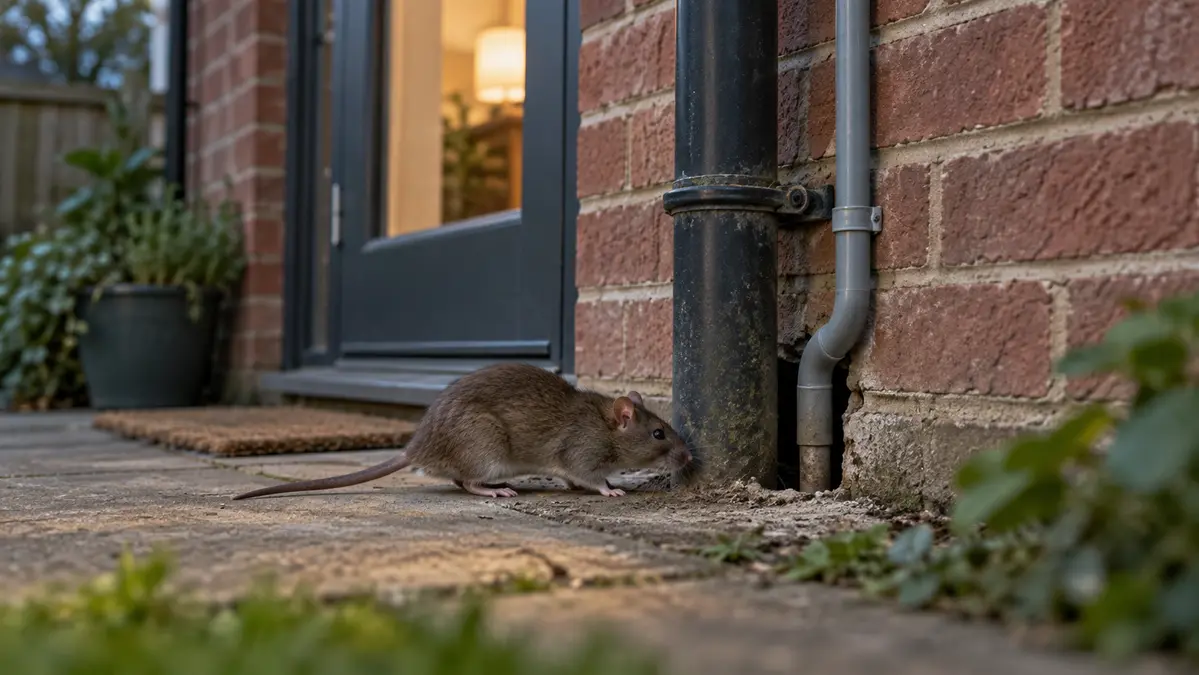
Why do rats keep returning to the same property?
Rats are adaptable animals that remember reliable routes to food and shelter. Once a property becomes useful to them, it may continue attracting rats until the underlying conditions change.
A recurring infestation usually involves one or more of the following:
- An entry point remains open
- Accessible food is still available
- The building provides safe harbourage
- A drainage or structural defect has been missed
- Proofing was incomplete or poorly timed
- Activity is coming from a neighbouring property or outside area
- Treatment reduced the population but did not resolve the source
Simply removing the visible rat does not change these conditions.
Is it the same rat coming back?
Sometimes it may be the same rat, particularly if a trap or treatment has not affected it. Rats can be cautious around unfamiliar objects and may avoid newly placed traps or bait stations for a period.
In other cases, the returning rat is a new animal using the same route. Rat scent, droppings, grease marks and established pathways can remain after treatment. If the opening is still accessible, another rat may discover or follow that route.
This is why repeated sightings should be treated as evidence of an unresolved access or environmental problem rather than assumed to be one unusually persistent rat.
Common reasons rats keep coming back
1. The entry point has not been found
A visible hole is not always the main access route. Rats may enter through:
- Gaps around service pipes
- Damaged air bricks or vents
- Openings beneath doors
- Defects around extensions
- Broken external drainage connections
- Gaps at the roofline
- Wall cavities connected to neighbouring buildings
- Spaces beneath floors
- Poorly sealed utility ducts
The point where a rat is heard or seen may be some distance from where it entered. For example, a rat entering at ground level can travel within a wall cavity and later be heard above the ceiling.
An inspection needs to consider the whole route rather than only the room in which activity is noticed.
2. Food remains available
Rats return to locations where they can feed with relatively little disturbance. Common food sources include:
- Household waste in unsecured bins
- Pet food left out overnight
- Fallen seed beneath bird feeders
- Compost containing food waste
- Poultry or livestock feed
- Food stored in damaged packaging
- Spillages beneath kitchen units
- Fruit that has fallen in the garden
- Waste from nearby commercial premises
The food source does not have to be inside your house. Rats may feed outdoors and use the building solely for shelter.
Removing food makes a property less attractive, but it will not necessarily remove rats that already have access to a secure nesting area.
3. The property still provides shelter
Lofts, wall cavities, suspended floors, sheds and cluttered storage areas offer warmth and protection. Insulation, cardboard, fabric and paper may also provide nesting material.
If rats can feed elsewhere and return to a quiet harbourage, they may continue using the property even after indoor food has been secured.
Where activity is concentrated above the ceiling, rats in the loft may leave droppings, damaged insulation, gnaw marks and greasy tracks around frequently used routes.
4. Proofing was incomplete
Blocking one obvious hole may create the impression that the property has been secured. However, rats may have several routes or find another weak point nearby.
Proofing can fail when:
- Only the most visible opening is sealed
- Materials are easy to gnaw or move
- Gaps around pipes are overlooked
- Doors remain poorly fitted
- Drainage access has not been considered
- Attached buildings share connected cavities
- The repair does not cover the entire opening
Effective proofing should be based on evidence from the infestation rather than guesswork.
5. Holes were blocked too early
Proofing is essential, but it must be timed correctly.
If an active entry point is closed while rats remain inside, they may:
- Gnaw a new opening
- Move into another room or cavity
- Cause further damage while attempting to escape
- Become trapped in an inaccessible void
- Die in a wall or beneath a floor
Current activity should be assessed and controlled before permanent proofing is completed. Monitoring afterwards helps confirm that the route has been successfully closed.
6. The treatment addressed the rats, not the cause
Traps or professionally selected rodent-control products may deal with the animals present at the time. They do not automatically repair holes, remove food sources or correct drainage defects.
When rats keep coming back after treatment, it may mean:
- The treatment programme ended too soon
- Not all active areas were identified
- Monitoring was insufficient
- The population extended beyond the treated area
- New rats entered after treatment
- Proofing was not completed
- The external source remained active
Control and prevention are connected but separate stages. Both must be addressed for a lasting result.
Do rats come back after poison?
Rats can appear again after rodenticide treatment if the original access route remains available. The returning activity may involve rats that did not encounter the treatment, rats living outside the treated area or new rats entering later.
Rodenticide use can also create additional concerns if products are placed incorrectly. Loose or unsecured poison can present risks to children, pets and non-target wildlife. Rats may also die in inaccessible parts of a building and create an odour.
Pesticides should only be used in accordance with their product label and applicable UK requirements. Where rats have returned following previous treatment, repeating the same approach without further investigation is unlikely to identify the underlying cause.
Can rats return through drains?
Yes, drains can provide an access route in some properties, but not every rat problem originates below ground.
A drainage-related infestation may be suspected when:
- Activity occurs around a toilet, utility room or soil pipe
- Rats appear beneath a suspended floor
- The problem continues despite external proofing
- Drain smells or recurring blockages are present
- Previous building work altered the drainage layout
- A damaged or disused pipe is connected to the system
Potential defects can include broken pipes, displaced joints, redundant connections or openings around pipe penetrations.
A standard inspection should come first. Where the evidence points towards a drainage source, a CCTV drain survey or assessment by an appropriate drainage specialist may be recommended. Drain-related measures should be chosen for the individual system rather than installed without understanding the fault.
Why do rats keep coming back to the garden?
Gardens can offer several of the resources rats need without allowing them into the house. Outdoor activity is often associated with:
- Bird seed on the ground
- Open compost bins
- Pet or poultry food
- Overflowing rubbish
- Fallen fruit
- Dense vegetation
- Stored materials beside walls
- Decking, sheds and outbuildings
- Water from ponds or leaking taps
- Waste or harbourage on neighbouring land
Seeing a rat in the garden does not always mean it is nesting inside the house. However, regular daytime sightings, burrows, repeated movement along walls or activity close to doors and vents should be investigated.
Reducing food and shelter outside lowers the likelihood of rats settling close to the building.
Do rats return to the same nest?
Rats may reuse a safe nesting area or establish a new nest nearby. A loft, cavity or outbuilding that remains undisturbed can continue to provide suitable harbourage after the original infestation has been treated.
Old nesting material, droppings and contamination should be assessed carefully. Cleaning alone will not prevent another infestation if the access route is still open.
You should also avoid sweeping or vacuuming dry droppings, as this can spread contaminated dust. Keep children and pets away from affected areas and obtain suitable cleaning guidance when contamination is extensive.
Why has rat activity returned after several quiet weeks?
A quiet period does not always mean that the problem was permanently resolved. Activity may reappear because:
- Rats were using the property intermittently
- A new rat discovered the same route
- Seasonal weather made the building more attractive
- A nearby food source changed
- Building work disturbed an outdoor harbourage
- Rats moved from an adjoining property
- Monitoring ended before proofing was confirmed
This is closely connected to the question of whether rats will go away on their own. A reduction in noise or sightings should not be treated as proof that all activity has ended.
Fresh droppings, gnaw marks, tracks and disturbed food provide stronger evidence than noise alone.
What attracts rats back after treatment?
Food
Waste, pet food, bird seed and spillages provide a reason to return.
Water
Leaking pipes, drains, pet bowls and standing water can provide moisture.
Shelter
Lofts, walls, floors, sheds and stored materials offer protection.
Familiar access
An open route allows rats to move between feeding and nesting areas.
External pressure
Changes in neighbouring buildings, drainage systems or outdoor habitats can move rats towards another property.
Removing one attraction helps, but the best results come from addressing all relevant conditions.
How to stop rats from coming back
Step 1: Confirm where activity is occurring
Record where and when rats are seen or heard. Look for fresh droppings, gnawing, rub marks, footprints, disturbed insulation and damaged food packaging.
This information can help distinguish a regular travel route from a nesting area.
Step 2: Identify the likely access routes
Inspect accessible external areas around:
- Doors and thresholds
- Pipe penetrations
- Air bricks and vents
- Drain connections
- Extensions and conservatories
- Roof edges
- Outbuildings
- Spaces beneath decking
Avoid entering unsafe roof spaces, confined areas or contaminated voids.
Step 3: Remove accessible food
Store food and animal feed in robust, closed containers. Clean spillages, secure bins and avoid leaving pet food out overnight.
Temporarily reducing bird feeding may be necessary where fallen seed is supporting rat activity.
Step 4: Address the current infestation
The appropriate treatment depends on where the rats are active, the building layout and the risks to people, pets and wildlife.
A professional assessment may use monitoring, traps or other controlled measures as part of an organised programme. The objective is to deal with the current activity while gathering evidence about routes and harbourage.
Step 5: Complete suitable proofing
Once it is appropriate to close the routes, proofing should use materials and repairs suited to the building defect. The full surrounding area should be checked rather than filling only one visible gap.
Step 6: Monitor after proofing
Continue looking for fresh evidence after repairs are completed. Successful control should be supported by:
- No new droppings
- No fresh gnawing
- No continuing food damage
- No new tracks
- No activity on monitoring devices
- No renewed sightings or noises
Monitoring is what separates a genuinely resolved problem from a temporary quiet period.
What should you avoid doing?
Do not repeatedly use the same unsuccessful treatment
If activity keeps returning, the cause requires reassessment. Repeating treatment without investigating access is likely to provide another temporary result.
Do not seal every hole immediately
An opening may be an active route. Sealing it without knowing whether rats remain inside can redirect or trap them.
Do not use loose poison
Incorrect rodenticide placement can endanger children, pets and wildlife. Always follow the label and relevant requirements.
Do not rely solely on ultrasonic devices
Their effectiveness can be inconsistent, and walls, furniture and insulation can interfere with coverage. They do not repair entry points or remove food and shelter.
Do not assume one quiet week means success
Rats may change their route, feeding time or pattern of activity. Look for multiple forms of evidence.
When should you call a pest professional?
Professional investigation is recommended when:
- Rats have returned after previous treatment
- Fresh droppings continue to appear
- You regularly hear activity inside walls or ceilings
- Rats are entering occupied rooms
- Electrical cables or pipework have been damaged
- The access point cannot be located
- A drainage route is suspected
- Several parts of the building are affected
- Children, pets or vulnerable residents could be exposed
- The affected area cannot be accessed safely
Recurring infestations require more than the removal of individual rats. An inspection should consider the building exterior, internal activity, adjoining structures, food sources, harbourage and—where evidence supports it—the drainage system.
Frequently asked questions
Why do rats keep coming back?
Rats usually keep coming back because an entry point, food supply or sheltered harbourage remains available. Treatment can remove existing rats, but it will not prevent new rats from using the same route.
Why do rats come back after treatment?
Treatment may have controlled the rats present at the time without resolving the source. Incomplete proofing, missed activity, nearby infestations or drainage defects can allow the problem to return.
Can rats find their way back to a house?
Rats can repeatedly use familiar routes between food and shelter. If an established access point remains open, the same rat or another rat may enter through it.
Will rats return if there is no food?
Removing accessible food reduces the attraction, but rats may still use the building for shelter while feeding outdoors or on neighbouring land.
Is a recurring rat problem always caused by drains?
No. Drains are one possible source, but rats can also enter through structural gaps, vents, doors, roof defects, wall cavities and service penetrations. The evidence at the property should determine what is investigated.
How do you stop rats coming back permanently?
No responsible pest controller can guarantee that a wild animal will never approach a property again. The risk can be substantially reduced by controlling current activity, identifying the source, removing attractive conditions, completing appropriate proofing and monitoring for renewed signs.
Can rats return after holes are sealed?
They can return if another opening exists or if the repair fails. Rats trapped inside may also create a new exit, which is why proofing should be properly timed and followed by monitoring.
Recurring rat problems in Bridgend
When rats keep coming back, the answer is not simply to place more traps or repeat the same treatment. The infestation must be traced back to the conditions and access routes supporting it.
Local pest control in Bridgend can investigate recurring activity, assess likely entry points and create a treatment and prevention plan based on the property rather than relying on a temporary fix.